


Services

Growth Strategy

Pricing & Value

Client Focus

Growth Strategy

THE CHALLENGE

Growth is slowing. Resources are stretched. The firm is uncertain where to focus investment and effort.

Segment and prioritise markets and clients

Develop value propositions

Planning for growth

Organising to execute

Voice of client programs

Market Opportunity Assessment

Understand market dynamics, demand and white space.

Segment strategy & positioning

Define where to play and how to win.

Go-to-market strategy

Align your offering, messaging and channels effectively.

Competitive & client insights

Use data and insight to stay ahead of the competition.

Value Proposition Development

Articulate and strengthen your unique value to clients.

Pricing & Value

THE CHALLENGE

Profitability is under pressure. Pricing is inconsistent. Fees do not reflect the value delivered. AI and automation are changing the playing field.

.

Pricing strategy

Pricing governance

Pricing capability

Client and matter/project profitability

Managing to the price

Limit discounting and reduce write-offs

Scoping estimating and managing variations

Commercial fee conversations

Alternative fee arrangements

Assessing and addressing the impact of AI and automation

Value-based pricing

Pricing analytics and reporting

Pricing strategy & optimisation

Develop a pricing strategy aligned to your value and growth goals and implement actions to improve profitability.

Pricing models & frameworks

Design models that reflect how you create and capture value.

Impact of AI and automation

Assess the impact of AI and automation on the value you create for clients, how you organise to deliver and how you price services.

Commercial governance

Build the right processes, guidelines and controls across the firm.

Capability and confidence

Build skill and confidence to communicate value and negotiate price.

Client Focus

THE CHALLENGE

The firm’s most important client relationships are not delivering their full potential. Resources are stretched and priorities are not clear. Unsure where to start.

Key client programs

Strategic account management

Client segmentation and prioritisation

Client listening

Building trust

Organising to deliver value

Key client strategy & planning

Focus on the right clients with clear growth plans.

Relationship strategy

Strengthen executive relationships that drive long-term loyalty.

Cross-sell & up-sell

Unlock more value across your service offerings.

Client value creation

Deliver outcomes that matter most to your clients.

Client performance review

Measure, review and continually improve client value.

Options for working together

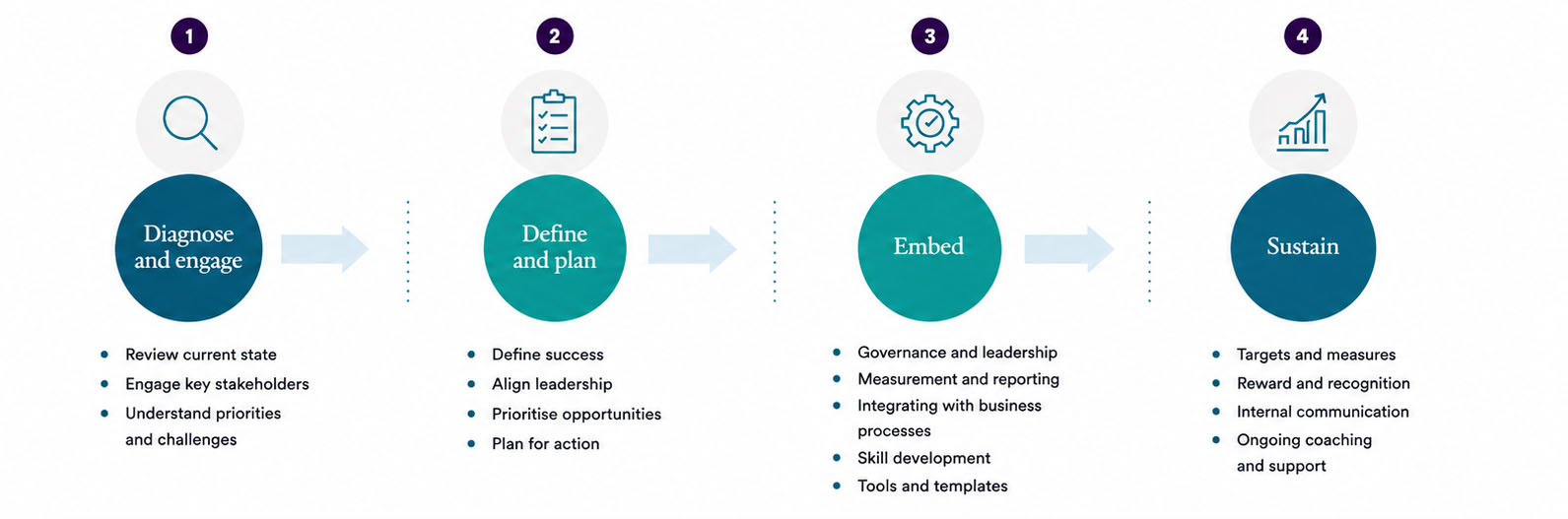
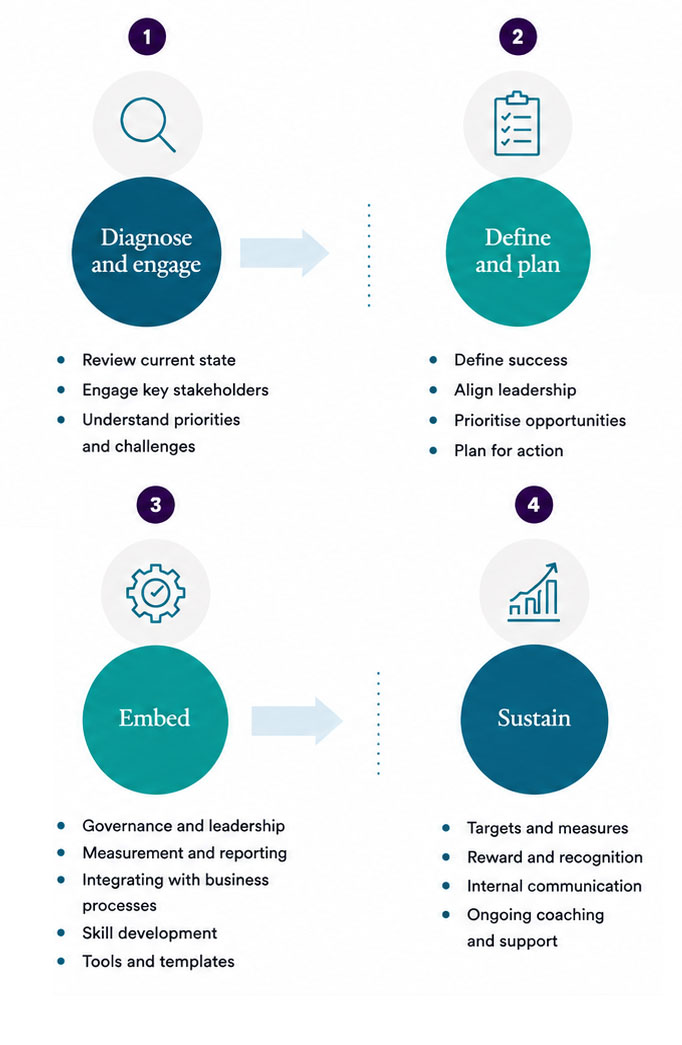
I work with firms in different ways depending upon their priorities and budget. I usually recommend commencing with a diagnostic (of varying scale) unless there is a clear mandate for immediate action in any area. The review serves the twofold purpose of both gathering information which informs action, and engaging stakeholders.

Curiosity

Nothing is assumed. Firms are not homogenous. My engagements are delivered in the context of a firm’s cultural norms and what makes them tick. I ask a lot of questions and don’t make assumptions.

Collaboration

I collaborate closely with members of the client team to execute the project and ensure a transfer of skill. Where consulting independence is needed, I provide professional independent opinion and insight either as an arm’s length consultant or member of a steering committee. I can also execute as part of an embedded member of the internal team to deliver an outcome.

Rigour

All recommendations and actions are defensible because they are based upon evidence, rigorous insight and analysis from external sources and within the firm.

THREE OPTIONS FOR WORKING TOGETHER

When embarking on any initiative that where external support is needed, there are three distinct ways of working: Consulting, contracting and engaging a fractional role. They sound similar. They’re all non-permanent. They’re all external. They all solve the “we need this capability but not full-time” problem. But they are fundamentally different in how they work, what they deliver, and how they integrate with your team. If you confuse them, you end up with the wrong solution, wasted budget, and a strategic gap that’s still unfilled.

The easiest way to understand the difference is to look at where they sit relative to your business. Consultants work with you on problems. They analyse. They recommend. They leave you with a deck and a plan. Contractors work for you on defined tasks. They execute. They deliver outputs. They don’t make strategic decisions. Fractional workers work as you, embedded in leadership. They decide. They execute. They own outcomes.

I work with firms in all three ways depending upon the objectives. Most commonly an engagement will start with a discrete consulting assignment followed by a consulting retainer, or a virtual or fractional role.

EMAIL

libby@libbymaynard.com.au

PHONE

+ 61 419 491 617

LOCATION

Melbourne, Australia

LINKEDIN

Connect with me

Contact Form Demo

Scroll to Top